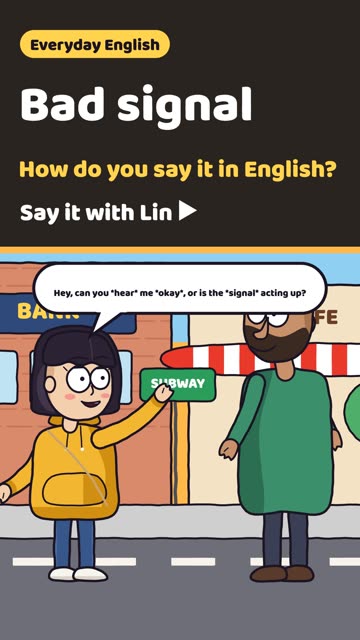
Saying no to a street fundraiser in English (advanced)
Advanced English for saying no to a street fundraiser. Key line: “Hey, could I sit this one out? I'm not signing up today.”
Full script
Saying no to a street fundraiser: how it really goes
Someone stops you on the street and asks for money or a signup. After this scene, you can say no in a polite, natural way.
Advanced More nuance, like softer refusals and light humor.
What people expect here
A street fundraiser usually starts with a quick greeting and a short ask. If you are not interested, a short polite no is normal. You do not need a long excuse.
Why these lines sound natural
“Could I pass for now?” sounds soft, and “I can’t donate today.” gives a clear answer. English often uses this kind of gentle order, so it sounds less sharp than a plain “No.”
A common trap
Do not translate word for word from Chinese and make it too stiff. “Sorry, not today.” or “I am not signing up today.” sounds natural and polite.
The same moment at three levels
What Lin says first in each version. Pick the one that feels a little hard.
Quick check
1They say: “Sure, no pressure. If you change your mind, we're here all afternoon.” What do you say?
That's Lin's line in the scene.
2They say: “Fair enough. Want a leaflet anyway, in case Future You feels more generous?” What do you say?
That's Lin's line in the scene.
Key phrases
The lines worth keeping. Read them once before you go out.
Polite no this time
Natural spoken English, polite no
A softer way to say no
Add today to sound softer
If you change your mind, ...
Often followed by an offer or next step
I get it.
Accepting someone's decision; very common
Common phrases in this scene
Quick answers
What does “Could I sit this one out” mean, and when do you say it?
“Could I sit this one out?”: polite no this time. Natural spoken English, polite no.
What does “I'm not signing up today” mean, and when do you say it?
“I'm not signing up today.”: a softer way to say no. Add today to sound softer.
What does “If you change your mind, ” mean, and when do you say it?
“If you change your mind, ...”: if you change your mind, . Often followed by an offer or next step.
What does “Fair enough” mean, and when do you say it?
“Fair enough.”: i get it. Accepting someone's decision; very common.