Presenting a project in English
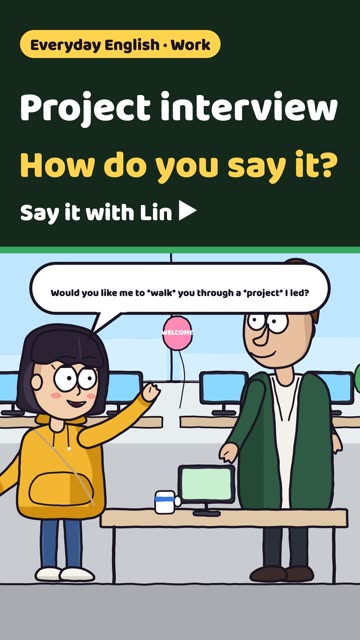
Everyday English for presenting a project. Key line: “Hey, can I walk you through our project idea?”
Full script
Presenting a project: how it really goes
This scene is about introducing a project at work. You can learn how to start clearly, give the main points, and sound natural.
Intermediate This version focuses on everyday small talk for explaining the idea and answering follow-up questions.
Start with the purpose
In work situations, people usually want to know why you are speaking first. “I'd like to present our project.” is polite, clear, and common.
Lead with the main idea
“First, it's a smart plant waterer.” gives the big picture before the details. English speakers often put the main point early, so the talk feels organized and easy to follow.
Don't make “last” sound final
“Last, it's cheap and easy to use.” means “one more point,” not “the end.” A common trap is to translate from Chinese too literally and sound stiff. “Lastly” or “Finally” can sound smoother.
The same moment at three levels
What Lin says first in each version. Pick the one that feels a little hard.
Quick check
1They say: “Sure, go ahead—I've got ten minutes and coffee.” What do you say?
That's Lin's line in the scene.
2They say: “Got it. And how is it different from regular task lists?” What do you say?
That's Lin's line in the scene.
Key phrases
The lines worth keeping. Read them once before you go out.
used to present something clearly
Common in spoken English to explain things
listener says yes, continue
Use when someone agrees you can begin
asks what problem it solves
Natural way to ask a product's value
asks how it is different
Useful for comparing features
Common phrases in this scene
Quick answers
What does “walk you through” mean, and when do you say it?
“walk you through”: used to present something clearly. Common in spoken English to explain things.
What does “go ahead” mean, and when do you say it?
“go ahead”: listener says yes, continue. Use when someone agrees you can begin.
What does “What's the main problem it solves” mean, and when do you say it?
“What's the main problem it solves?”: asks what problem it solves. Natural way to ask a product's value.
What does “How is it different from” mean, and when do you say it?
“How is it different from...?”: asks how it is different. Useful for comparing features.