Saying no to a coworker who needs help in English
Everyday English for saying no to a coworker who needs help. Key line: “I wish I could, but I'm swamped today.”
Full script
Saying no to a coworker who needs help: how it really goes
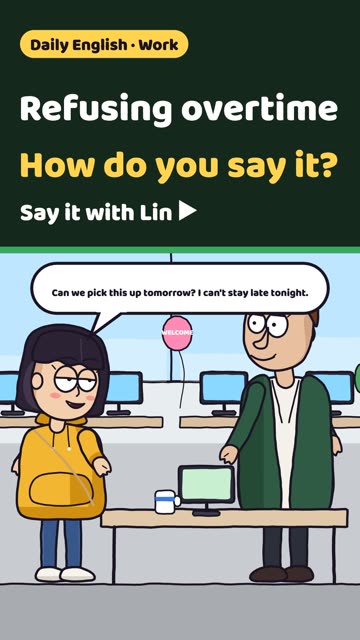
A coworker asks for help, and you need to say no without sounding rude. You can say what you can do now, and when you might be free later.
Intermediate Everyday coworker talk with natural, friendly replies.
Work comes first
In many offices, people expect you to handle your own tasks first. It is polite to say you are busy, then give a clear time or a next step. In the UK and the US, this usually sounds fine if your tone stays calm.
Why these lines work
“I’m sorry, I can’t right now.” is short and soft. “I need to finish this today.” gives a real reason without a long story. English speakers often keep it simple and do not explain every detail.
The common trap
Do not sound too direct, like “No, ask someone else.” That can feel cold at work. A better line is “I wish I could, but I’m swamped today.” or “I can help after lunch.”
The same moment at three levels
What Lin says first in each version. Pick the one that feels a little hard.
Quick check
1They say: “I am. I actually need help with this report.” What do you say?
That's Lin's line in the scene.
2They say: “Got it. Should I ask Jordan, or bribe you with cookies?” What do you say?
That's Lin's line in the scene.
Key phrases
The lines worth keeping. Read them once before you go out.
Casual: ask what's wrong
Use it when a coworker seems stuck.
Polite no before the reason
First show willingness, then say no.
Natural way to say you're too busy today
Common and natural in spoken English.
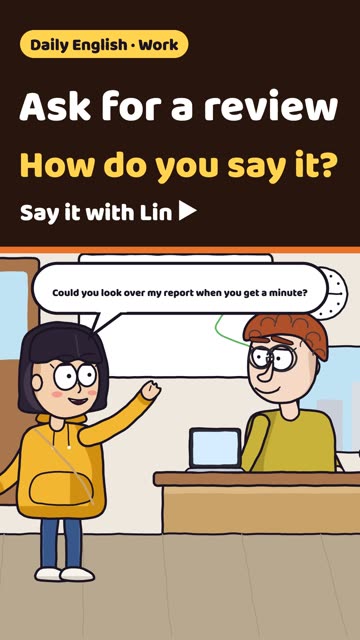
Ask for a quick review later
A quick look, not detailed editing.
Common phrases in this scene
Quick answers
What does “What's up” mean, and when do you say it?
“What's up?”: casual: ask what's wrong. Use it when a coworker seems stuck.
What does “I wish I could, but” mean, and when do you say it?
“I wish I could, but...”: polite no before the reason. First show willingness, then say no.
What does “I'm swamped today” mean, and when do you say it?
“I'm swamped today.”: natural way to say you're too busy today. Common and natural in spoken English.
What does “look it over later” mean, and when do you say it?
“look it over later”: ask for a quick review later. A quick look, not detailed editing.