Asking for a raise in English (advanced)
Advanced English for asking for a raise. Key line: “Sarah, could we sit down for a minute? I'd like to discuss my salary.”
Full script
Asking for a raise: how it really goes
This scene is about talking to your boss about better pay. You can learn how to ask in a polite way and explain why.
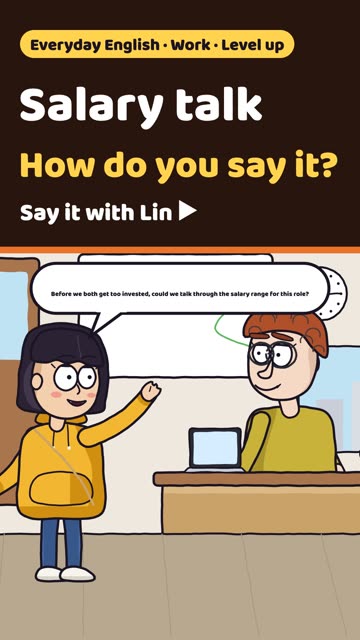
Advanced More careful language for a serious pay talk, with a stronger reason and a salary range.
How this goes
If you want a raise, it is common to ask for a meeting first. In many places, that feels more polite than bringing it up suddenly in the middle of work.
Why these lines work
“I'd like to talk about my pay” and “Could we talk about a raise for a minute?” sound polite because they soften the request. English speakers often keep this short and direct instead of giving a long explanation first.
Common trap
A direct line like “Give me a raise” can sound too strong. A better version is “Can I ask for a small raise?” or “I'd like to discuss my salary.”
The same moment at three levels
What Lin says first in each version. Pick the one that feels a little hard.
Quick check
1They say: “Sure—what's on your mind? You look way too calm for this.” What do you say?
That's Lin's line in the scene.
2They say: “That's a bit higher than usual, but your case is pretty solid.” What do you say?
That's Lin's line in the scene.
Key phrases
The lines worth keeping. Read them once before you go out.
Polite way to begin
Softens the opening; more natural
Clear, professional way to raise it
More formal than talk about
Say pay should match your work
Use it when results and pay should match
Give your target raise range
Useful for stating expected increase
Common phrases in this scene
Quick answers
What does “Could we sit down for a minute” mean, and when do you say it?
“Could we sit down for a minute?”: polite way to begin. Softens the opening; more natural.
What does “I'd like to discuss my salary” mean, and when do you say it?
“I'd like to discuss my salary.”: clear, professional way to raise it. More formal than talk about.
What does “My pay should reflect that” mean, and when do you say it?
“My pay should reflect that.”: say pay should match your work. Use it when results and pay should match.
What does “in the ten to twelve percent range” mean, and when do you say it?
“in the ten to twelve percent range”: give your target raise range. Useful for stating expected increase.