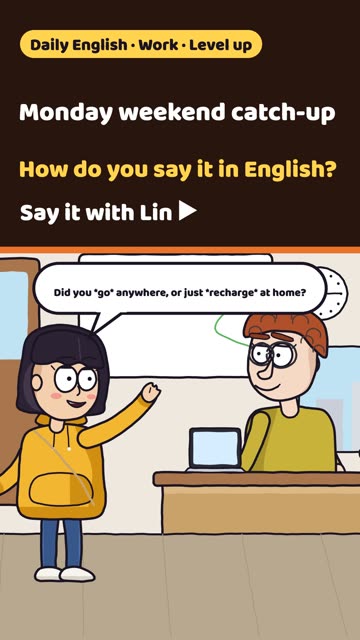
Asking a coworker to explain in English (advanced)
Advanced English for asking a coworker to explain. Key line: “Could you walk me through this chart? I'm clearly missing something.”
Full script
Asking a coworker to explain: how it really goes
In this scene, you ask a coworker to help with a chart or a work task. After this, you can ask for clear help and check the part you do not understand.
Advanced More nuance with soft, natural phrasing and a little humor.
Ask for one clear part
At work, people usually like a clear question, not a vague one. “Can you explain this to me?” and “Could you walk me through this?” sound normal because you show where you need help.
Why these lines sound natural
“What are you stuck on?” is a friendly way to ask where the problem is. “Could you go over that part again?” is soft and polite. Native speakers often use “could” and leave out extra words, so the request sounds calm, not heavy.
Avoid direct translation
A common mistake is “Please explain me this” or “Explain this for me.” In English, say “explain this to me” or “go over this part again.” That sounds much more natural in a work chat.
The same moment at three levels
What Lin says first in each version. Pick the one that feels a little hard.
Quick check
1They say: “Sure—where did it start losing you, at the trend line or the notes?” What do you say?
That's Lin's line in the scene.
2They say: “Honestly, to justify everyone's coffee. Want me to unpack the last sentence too?” What do you say?
That's Lin's line in the scene.
Key phrases
The lines worth keeping. Read them once before you go out.
Used to ask for an explanation
Natural when asking for help
Ask where the problem started
Ask for the exact confusing part
Used to make it sound less serious
Use it to calm things down
Ask to explain it more clearly
unpack = explain piece by piece
Common phrases in this scene
Quick answers
What does “walk me through this” mean, and when do you say it?
“walk me through this”: used to ask for an explanation. Natural when asking for help.
What does “Where did it start losing you” mean, and when do you say it?
“Where did it start losing you?”: ask where the problem started. Ask for the exact confusing part.
What does “less dramatic than it sounds” mean, and when do you say it?
“less dramatic than it sounds”: used to make it sound less serious. Use it to calm things down.
What does “unpack the last sentence” mean, and when do you say it?
“unpack the last sentence”: ask to explain it more clearly. unpack = explain piece by piece.