
Spoken English phrase
What does “up for…” mean?
"Be up for" means willing or interested. But in phrases like "sign up for" or "line up for", you need to read the whole verb phrase, not only "up for".
When people say it
- "be up for" + noun or -ing: willing or interested. Example: "Are you up for karaoke?"
- "sign up for" + class, event, membership: register. Example: "Can I sign up for a membership today?"
- "line up for" + tickets, food, service: wait in a line. Example: "Fans lined up for tickets." In British English, people often say "queue for".
- Sometimes the pattern is just verb + "up", then "for someone" shows who gets the action. This is not the phrase "up for". Example: "Could you heat this up for me?"
Tone: "Be up for" is casual and friendly; "sign up for" is neutral, and "line up for" is also neutral, though British English often prefers "queue for".
Careful: Do not read every "up for" as willing. Check the verb before "up": "I’m up for going" means willing, but "sign up for a class" means register, and "heat this up for me" is a different pattern.
In 7 of Lin's scenes
Real lines from the scenes. Open one to watch it and say it yourself.
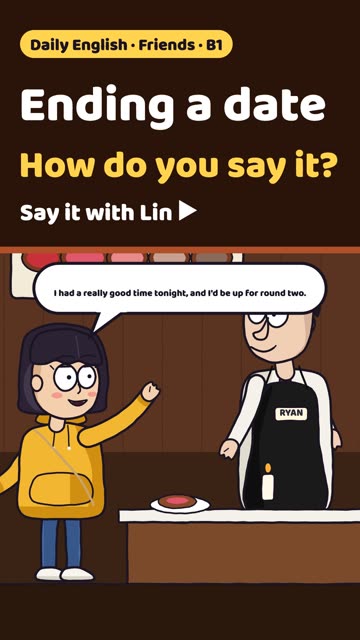
I had a really good time tonight, and I'd be up for round two.Ending a date · Advanced

Hey, would you be up for checking out a teahouse with me tomorrow?Taking a friend to a teahouse · Advanced
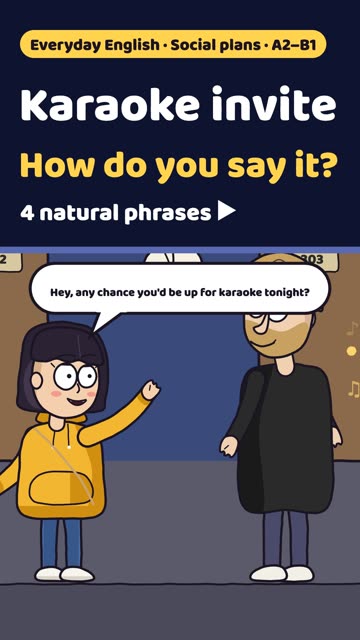
Hey, any chance you'd be up for karaoke tonight?Taking a friend to karaoke · Advanced
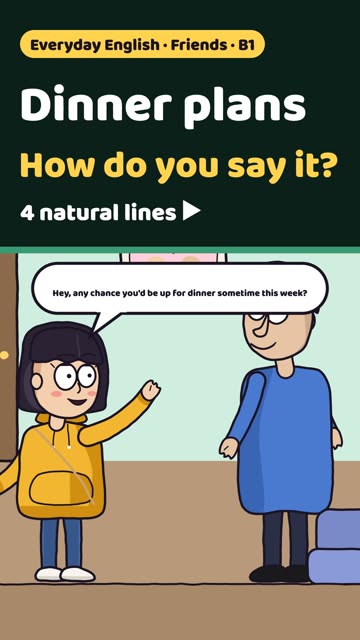
Hey, any chance you'd be up for dinner sometime this week?Making dinner plans · Advanced

Hey, would you be up for chatting in English for a bit?At a language exchange · Advanced
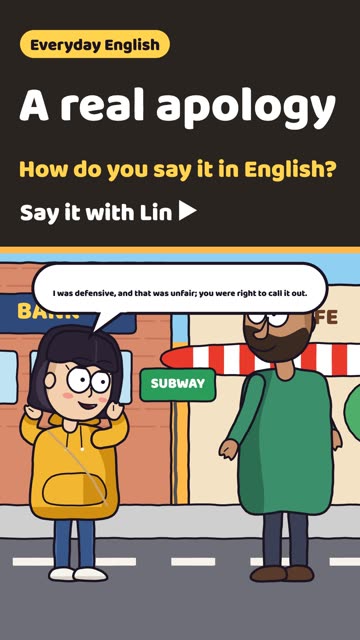
If you're up for it, I'd like to make it up—minus any haircut material.Apologizing · Advanced

Perfect—would you be up for checking out that night market Saturday?Making weekend plans · Advanced
Shadow
Line by line
Lin
I had a really good time tonight, and I'd be up for round two.
Lin
Hey, would you be up for checking out a teahouse with me tomorrow?
Lin
Hey, any chance you'd be up for karaoke tonight?
Other ways to say it
want to
More direct and simple.
feel like
More about your mood right now.
be open to
Softer and less eager. Good for polite suggestions.
Quick answers
Can I say "I’m up for to go"?
No. Say "I’m up for going" or "I’m up for it." After "up for", use a noun, pronoun, or -ing form.
Does "up for" always mean "willing to"?
No. Only "be up for" usually has that meaning. In "sign up for" or "line up for", the whole verb phrase means something else.