英語で長距離バスに乗る
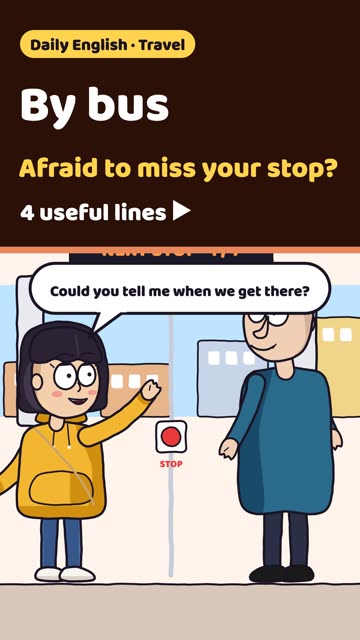
長距離バスに乗るときの実用英語です。重要なひと言: “Excuse me, is this where I catch the long-distance bus?”
全文スクリプト
長距離バスに乗る: 実際の流れ
長距離バスターミナルで、乗るバス、切符、荷物についてたずねています。この場面のあとなら、どのバスに乗るかを聞き、切符を買い、待つ場所を見つけられます。
中級 乗車や荷物について、少し詳しく話す駅での会話です。
まずは乗るバスを確認します
バスターミナルでは、まず番号、行き先、出発時刻を確認することが多いです。日本語をそのまま直訳するより、場所を自然にたずねるほうがいいです。"Which bus goes to Nanjing?" は短くてわかりやすい言い方です。
切符と荷物を先に確認します
多くの場所では、乗る前に切符を買い、そのあとで荷物を預けることがあります。"Can I buy a ticket here?" と "One way, please." は、短くて丁寧なので自然に聞こえます。
どこで待つかを聞きます
"Where do I wait?" は、バスターミナルでよく使う自然な聞き方です。学習者は "Where wait me?" のように言ったり、日本語に近い語順にしてしまいがちですが、英語では必要な語と正しい語順が大切です。
同じ場面を3つのレベルで
各バージョンでLinが最初に言う内容です。少し難しいと感じるものを選んでください。
簡単チェック
1相手は “Yeah, you're in the right place. It usually lines up here.” と言っています。あなたは何と言いますか?
これはシーンの中のLinのセリフです。
2相手は “Buy it at the counter first, then show the driver.” と言っています。あなたは何と言いますか?
これはシーンの中のLinのセリフです。
このシーンのセリフを一つずつ英語で
「すみません、長距離バスはここで乗るんですか」は英語で何と言う?
こう言えます: Excuse me, is this where I catch the long-distance bus?
場所を丁寧にたずねる。Excuse meでやわらかい。
「Yeah, you're in the right place. It usually lines up here」の意味と返し方は?
意味は「はい、ここで合っています。たいていここに並びます」。こう返せます: Great, I almost followed a bus to the airport.
場所を確認して安心させる。in the right placeが自然。
「よかった。あやうくバスを追いかけて空港まで行くところでした」は英語で何と言う?
こう言えます: Great, I almost followed a bus to the airport.
行き先を間違えそうで笑う。almostで軽くする。
「Then you'd get a vacation, just not the one planned」の意味と返し方は?
意味は「そしたら休暇にはなりますね。ただ、予定していたものとは違いますけど」。こう返せます: Do I need to buy a ticket now, or onboard?
軽い冗談。you'd getで本気の注意にしない。
「今、チケットを買う必要がありますか、それとも乗ってからですか」は英語で何と言う?
こう言えます: Do I need to buy a ticket now, or onboard?
2択をたずねる。now, or onboardが口語的。
「Buy it at the counter first, then show the driver」の意味と返し方は?
意味は「まず窓口で買って、それから運転手さんに見せてください」。こう返せます: Got it. And this one goes straight there, no surprise cows?
手順を順番に言う。first, thenで分かりやすい。
「なるほど。で、このバスはそのまま行きますよね?まさか牛は出ないですよね」は英語で何と言う?
こう言えます: Got it. And this one goes straight there, no surprise cows?
直行か確認しつつ冗談も入れる。no surprise cowsがユーモア。
「Straight there. If you see cows, you've gone way too far」の意味と返し方は?
意味は「そのまま行きます。牛を見たら、かなり行きすぎています」。こう返せます:
冗談を返しつつ注意する。gone way too farで乗り過ごし。
このシーンで使える表現
「場所は合ってる」は英語で何と言う?
You're in the right place
Yeah, you're in the right place. It usually lines up here.
「ここに並ぶ」は英語で何と言う?
lines up here
Yeah, you're in the right place. It usually lines up here.
「バスを追いかけそうになった」は英語で何と言う?
I almost followed a bus
Great, I almost followed a bus to the airport.
「空港へ」は英語で何と言う?
to the airport
Great, I almost followed a bus to the airport.
「休暇になっちゃう」は英語で何と言う?
you'd get a vacation
Then you'd get a vacation, just not the one planned.
「予定してたやつじゃない」は英語で何と言う?
not the one planned
Then you'd get a vacation, just not the one planned.
「それとも車内で」は英語で何と言う?
or onboard
Do I need to buy a ticket now, or onboard?
「まず窓口で買って」は英語で何と言う?
Buy it at the counter first
Buy it at the counter first, then show the driver.
「運転手に見せる」は英語で何と言う?
show the driver
Buy it at the counter first, then show the driver.
「直行する」は英語で何と言う?
goes straight there
Got it. And this one goes straight there, no surprise cows?
「急に牛は出てこない」は英語で何と言う?
no surprise cows
Got it. And this one goes straight there, no surprise cows?
「まっすぐそこへ」は英語で何と言う?
Straight there
Straight there. If you see cows, you've gone way too far.
「かなり行き過ぎた」は英語で何と言う?
you've gone way too far
Straight there. If you see cows, you've gone way too far.
ここでよくある間違い
相手はこうも言うかも
うん、ここで合ってる
≈ Yeah, you're in the right place. It usually lines up here.
まず買って、運転手に見せて
≈ Buy it at the counter first, then show the driver.
牛が見えたら行き過ぎ
≈ Straight there. If you see cows, you've gone way too far.
重要フレーズ
覚えておきたい表現です。出かける前に一度読んでおきましょう。
ここがバス乗り場かをたずねる表現です。
乗る場所を聞くときに自然です
そこが正しい場所だと言っています。
"correct place" より自然です
いつチケットを買うかを聞く表現です。
"or" のあとでは、この短い形がよく使われます
直行バスだと言っています。
straight there = 途中停車なし
この場面のよく使うフレーズ
よくある質問
“Is this where I catch the long-distance bus”はどういう意味で、どんな時に言いますか?
“Is this where I catch the long-distance bus?”:ここがバス乗り場かをたずねる表現です。乗る場所を聞くときに自然です。
“You're in the right place”はどういう意味で、どんな時に言いますか?
“You're in the right place.”:そこが正しい場所だと言っています。"correct place" より自然です。
“Do I need to buy a ticket now, or onboard”はどういう意味で、どんな時に言いますか?
“Do I need to buy a ticket now, or onboard?”:いつチケットを買うかを聞く表現です。"or" のあとでは、この短い形がよく使われます。
“It goes straight there”はどういう意味で、どんな時に言いますか?
“It goes straight there.”:直行バスだと言っています。straight there = 途中停車なし。