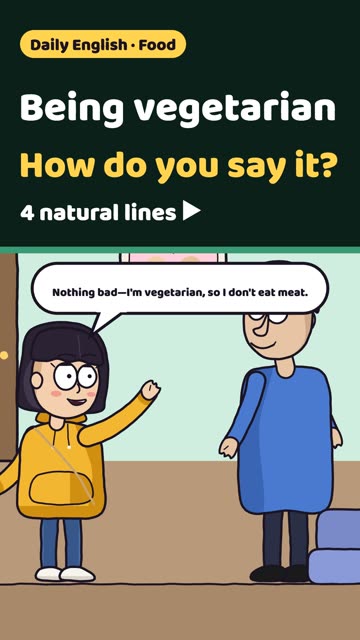
英語で料理の中身を聞く
料理に何が入っているかを英語で聞くときの表現です。キーフレーズは “Could you tell me what's in the chicken salad?” です。
全文スクリプト
料理の中身を聞く: 実際の流れ
料理に何が入っているかを尋ねて、自分が避けたいものが入っていないか確認します。このあと、食材について聞きながら、簡単なお願いも同時にできます。
中級 いつもの注文で、食材の確認を増やしたり、料理を少し変えたりする表現です。
先に聞いてから調整します
レストランでは、混ざった料理に何が入っているかを聞くのは自然です。特にサラダ、シチュー、ボウル系の料理ではよくあります。アレルギーがあるときや、ただ苦手なものがあるときは、早めに、はっきり伝えるのが普通です。
短い質問が自然です
“What’s in this dish?” と “Does it come with onions?” はどちらも自然です。英語では、まず短く直接たずねて、そのあとで “Can I get it with no onions?” のような丁寧なお願いを足すことがよくあります。
直訳しすぎないようにします
“inside got what” のような直訳は、英語では不自然です。代わりに “What’s in this?” や “Could I get it with no onions?” と言います。わかりやすく、丁寧で、店の人も答えやすい表現です。
同じ場面を3つのレベルで
各バージョンでLinが最初に言う内容です。少し難しいと感じるものを選んでください。
簡単チェック
1相手は “Sure—it's got chicken, celery, grapes, and mayo.” と言っています。あなたは何と言いますか?
これはシーンの中のLinのセリフです。
2相手は “Of course. The dressing comes on the side, too.” と言っています。あなたは何と言いますか?
これはシーンの中のLinのセリフです。
このシーンのセリフを一つずつ英語で
「チキンサラダの中身を教えてもらえますか」は英語で何と言う?
こう言えます: Could you tell me what's in the chicken salad?
やわらかく中身をたずねる言い方。
「Sure—it's got chicken, celery, grapes, and mayo」の意味と返し方は?
意味は「もちろんです。鶏肉、セロリ、ぶどう、マヨネーズが入っています」。こう返せます: Does it come with onions? They follow me all day.
材料をそのまま並べる、ふつうで自然な返し。
「玉ねぎは入っていますか? 一日中ついてくるんです」は英語で何と言う?
こう言えます: Does it come with onions? They follow me all day.
冗談まじりで聞いて、やわらかい感じにしている。
「No onions, but the pickles on top are pretty pushy」の意味と返し方は?
意味は「玉ねぎは入っていませんが、上にのっているピクルスはかなり強めです」。こう返せます: Got it. Could I get the pickles left off, then?
まず否定してから、ピクルスを軽くからかっている。
「なるほど。では、ピクルスは抜いてもらえますか」は英語で何と言う?
こう言えます: Got it. Could I get the pickles left off, then?
命令せずに、やわらかくトッピング抜きを頼んでいる。
「Of course. The dressing comes on the side, too」の意味と返し方は?
意味は「もちろんです。ドレッシングも別添えです」。こう返せます: Perfect, thanks. I like my lunch a little less bossy.
引き受けて、ついでに追加情報も伝えている。
「いいですね、ありがとうございます。昼ごはんは少しおとなしいくらいが好きです」は英語で何と言う?
こう言えます: Perfect, thanks. I like my lunch a little less bossy.
くだけた言い方で、強すぎない食事が好きだと締めている。
「Fair enough—I'll tell the pickles not to take it personally」の意味と返し方は?
意味は「わかりました。ピクルスにも気にしないよう伝えておきます」。こう返せます:
ピクルスに気持ちがあるように言って、冗談を続けている。
このシーンで使える表現
「何が入っている」は英語で何と言う?
what's in
Could you tell me what's in the chicken salad?
「教えていただけますか」は英語で何と言う?
Could you tell me could you tell me…? →
Could you tell me what's in the chicken salad?
「入っている」は英語で何と言う?
it's got
Sure—it's got chicken, celery, grapes, and mayo.
「~は入っていますか」は英語で何と言う?
Does it come with
Does it come with onions? They follow me all day.
「一日中つきまとう」は英語で何と言う?
follow me all day
Does it come with onions? They follow me all day.
「かなり強引」は英語で何と言う?
pretty pushy
No onions, but the pickles on top are pretty pushy.
「玉ねぎなし」は英語で何と言う?
No onions
No onions, but the pickles on top are pretty pushy.
「~をください」は英語で何と言う?
Could I get
Got it. Could I get the pickles left off, then?
「抜いて」は英語で何と言う?
left off
Got it. Could I get the pickles left off, then?
「別添えで出る」は英語で何と言う?
comes on the side
Of course. The dressing comes on the side, too.
「少し押しつけがましくない」は英語で何と言う?
a little less bossy
Perfect, thanks. I like my lunch a little less bossy.
「ばっちり、ありがとう」は英語で何と言う?
Perfect, thanks
Perfect, thanks. I like my lunch a little less bossy.
「まあいいか」は英語で何と言う?
Fair enough fair enough →
Fair enough—I'll tell the pickles not to take it personally.
「気にしないで」は英語で何と言う?
take it personally
Fair enough—I'll tell the pickles not to take it personally.
ここでよくある間違い
相手はこうも言うかも
もちろん、鶏肉、セロリ、ぶどう、マヨネーズが入っています。
≈ Sure—it's got chicken, celery, grapes, and mayo.
もちろん。ドレッシングも別添えです。
≈ Of course. The dressing comes on the side, too.
もちろん。ピクルスに気にしないよう言っておくよ。
≈ Fair enough—I'll tell the pickles not to take it personally.
重要フレーズ
覚えておきたい表現です。出かける前に一度読んでおきましょう。
材料を丁寧にたずねる言い方です
料理の中身を聞くときに自然です
玉ねぎが入っているか聞くときに使います
come with = 含まれている
ピクルスを抜いてほしいときに使います
left off = 入れない
別に出されることを表します
on the side = 別添え
この場面のよく使うフレーズ
このシーンのフレーズと、ほかの言い方
よくある質問
“Could you tell me what's in the chicken salad”はどういう意味で、どんな時に言いますか?
“Could you tell me what's in the chicken salad?”:材料を丁寧にたずねる言い方です。料理の中身を聞くときに自然です。
“Does it come with onions”はどういう意味で、どんな時に言いますか?
“Does it come with onions?”:玉ねぎが入っているか聞くときに使います。come with = 含まれている。
“Could I get the pickles left off”はどういう意味で、どんな時に言いますか?
“Could I get the pickles left off?”:ピクルスを抜いてほしいときに使います。left off = 入れない。
“The dressing comes on the side”はどういう意味で、どんな時に言いますか?
“The dressing comes on the side.”:別に出されることを表します。on the side = 別添え。